

genuine articles
A few words on Beyoncé's worst and best tour looks, why Ryan Coogler said no to sequels, and the podcaster doing fashion's best interviews

Welcome back to A Few Minutes—your weekly syllabus for cultural commentary, curated links, and meaning-making across pop culture, creativity, wellness, and style.
Pressed for time? Here are three picks for the group chat:
Daydreaming = Creativity
The New York Times published a five-day creativity challenge, and day three—on daydreaming—was sent to me by my friend Imani. I learned that people who are inherently creative tend to daydream more. Higher rates of daydreaming go hand in hand with better performance on divergent thinking tasks. (Science confirming what my screen time already knew.)
Brian Tyree Henry, Producer’s Producer
In Vanity Fair, Brian Tyree Henry talks about the joy of acting and producing—reminding me why I love podcasting behind the scenes: “Instead of just sitting at the table and consuming it, I actually get to know all the flavors and smells and varieties that go into making something that I cook.” Same.
Materialists & the Cost of Love
Eliza Brooke’s feature of Celine Song for SSENSE on her new A24 film Materialists tells us this: “These twin fixations are the basis of Materialists, in which a jaded matchmaker named Lucy (Dakota Johnson) finds herself considering a future with either Harry (Pedro Pascal), a perfect-on-paper and very wealthy man who doesn’t quite set her heart racing, or John (Chris Evans), her theater actor ex-boyfriend who can’t give her the financial security she craves.” I’m interested in a film that’s more than a love triangle or cheap dramatics. Celine Song seems to be after something deeper—what we trade: love for safety, romance for ROI. Materialists is out 6/13 and I’m READY.
If you’ve got more than a few minutes…
I’ve been thinking about tomorrow night's BET Awards, which bills itself as “culture’s biggest night.” I had the chance to attend in 2018, and honestly, it’s always a fun time. Even though it’s earlier this year, it still marks the unofficial start of summer for Black LA and Hollywood.
What’s genuinely cool is how BET Weekend—as we call it—has evolved the awards beyond just the show. They've woven in panels and programming that tackle everything from AI to the beauty industry, plus live talks on what it takes to be a great dad. The expansion feels thoughtful and necessary—offering more than just industry brunches and parties—and taps into nostalgia with things like the 106 & Park reunion.
Still, it's hard to forget the 2022 awards, where Diddy received a lifetime achievement award.
He’s now facing federal charges for racketeering conspiracy and sex trafficking—charges that could result in life in prison if convicted. The trial has included testimony about alleged drug-fueled sex marathons. Yet if you search “Diddy,” “Sean Combs,” or any of his monikers on BET’s site today, you won’t find coverage of these serious allegations. I’m not trying to implicate BET specifically, but when you brand yourself as the cornerstone of Black culture, glossing over the full legacies of people, often under the guise of “not tearing down our people,” feels cheap.
The awards show itself is always excellently produced by Jesse Collins Entertainment (recently profiled in The New York Times)—no question. But I’m curious: do we even care about the BET Awards anymore?
The NYC (East Rutherford) and London Cowboy Carter shows have been the most interesting.
Beyoncé wore a custom croc-embossed leather jacket by MM6 Margiela on tour in NY/NJ — marking the first time the brand has ever done a bespoke piece. Add to that: a Gladys Tamez hat, Marlone Souliers boots. This is her best tour look yet, styled by Shiona Turini.
Throughout this era, we've been subjected to a parade of gaudy, overly Americana outfits that feel almost nationalist in their desperation, star-spangled everything, flag motifs plastered across every surface, styling choices that scream "look how American I am!" It's the visual equivalent of trying too hard, of someone attempting to cement themselves and this album as part of Americana and American history through sheer force of patriotic imagery.
The irony is that the argument — that Black country is American too — doesn't need this kind of performative validation. It's historically accurate and artistically valid on its own merits.
SPOILER: During the show, Blue Ivy does a Naomi Campbell–esque runway walk to “Déjà Vu,” which consequently got a shoutout from Naomi herself on Instagram during the London stop.
Also of note: Les Twins are back — and I wonder if their absence from previous U.S. tour stops has anything to do with the country’s immigration process. Earlier this year, FKA twigs canceled her first North American tour dates and her Coachella 2025 appearance due to visa issues.
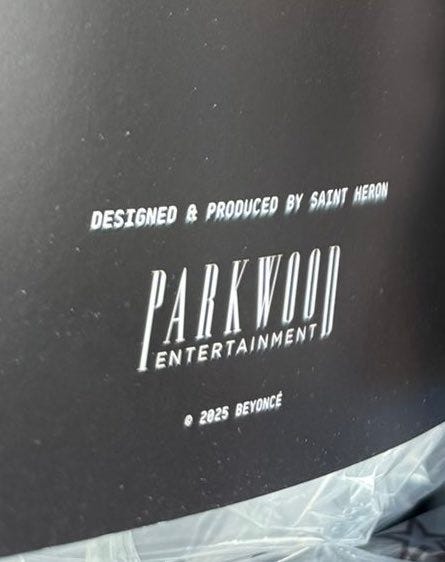
Last but certainly not least: the Cowboy Carter tour book was produced by none other than Saint Heron — a multidisciplinary institution reverencing the spiritual act of creation, founded by Solange Knowles. In late May, Saint Heron’s Instagram showed the world their interiors, collection, and archives, ranging from furniture designed by Solange herself to Virgil Abloh pieces to her instantly sold-out glassware.
The $104 book is currently sold out:
https://shop.beyonce.com/products/photo-book
Coogler’s Sinners, Sequel-Free by Design
Earlier this week, Deadline reported that Ryan Coogler said no to a Sinners sequel — and thankfully, he means it. Referring back to a quote from an April 2025 interview with Ebony magazine: “I’ve been in a space of making franchise films for a bit, so I wanted to get away from that,” Coogler said. “I was looking forward to working on a film that felt original and personal to me.”
That’s countercultural in a moment where sequels feel inevitable and original ideas are flattened into franchises before the credits even roll. He’s right to resist. Sinners doesn’t need a part two. It’s not an algorithm, it’s art.
And yet — it’s thriving. The film dropped digitally last week and is already the No. 1 top seller on Prime Video, outperforming even Minecraft: The Movie, according to Forbes. Mankaprr Conteh wrote about it for Rolling Stone, diving into the relationship between hip-hop, spiritual lineage, and that unforgettable dance sequence led by Miles Canton, aka Preacher Boy — a griot with the ability to conjure the ancestors through his voice.
Coogler describes blues as “the gangsta rap of its era, replete with stories of death and survival.” That insight could have been a throwaway quote. Instead, it anchors the film’s cultural excavation.
It’s also a reminder of editorial and institutions' role when the market tries to squeeze something sacred. We don’t need more Sinners. We need more around it—essays, tributes, museum exhibits, Studio Ghibli–style screenings that teach us how to sit with a single story and turn it over, again and again.
House of CB Revisits the Bandage Dress
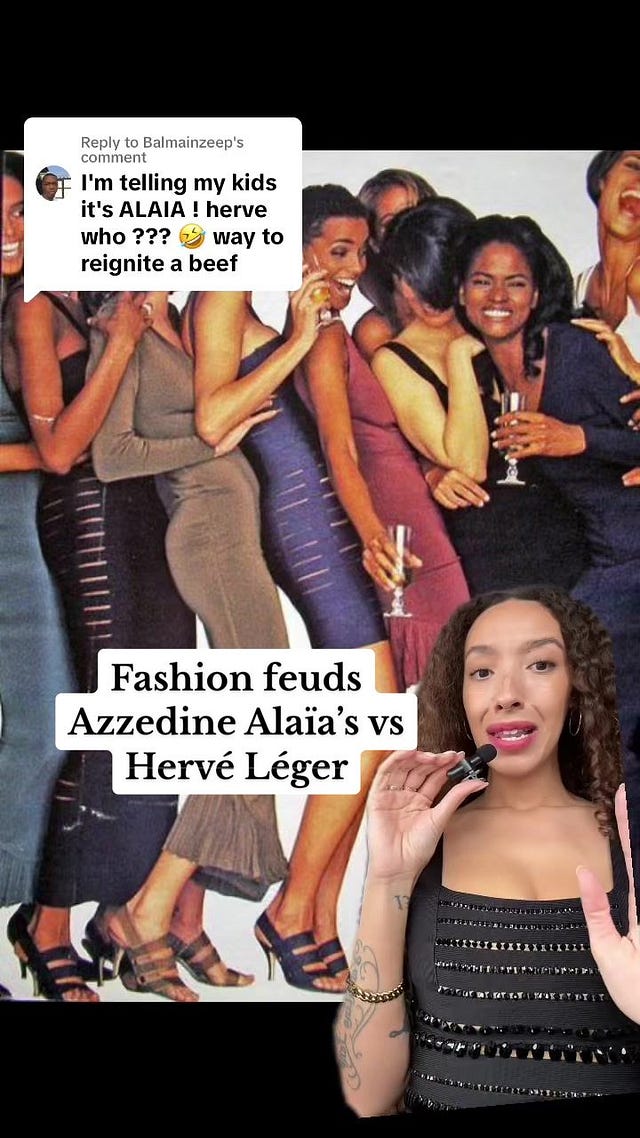
House of CB dropped a Bandage archive capsule this week to mark its 15th birthday. A silhouette born of Azzedine Alaïa’s legacy and later remixed by Hervé Léger, the Bandage dress isn’t just fabric—it’s fashion muscle memory. Everyone from ’90s supermodels to Teyana Taylor and Cassie has had runway or red carpet moments in the look. Read about its history here.


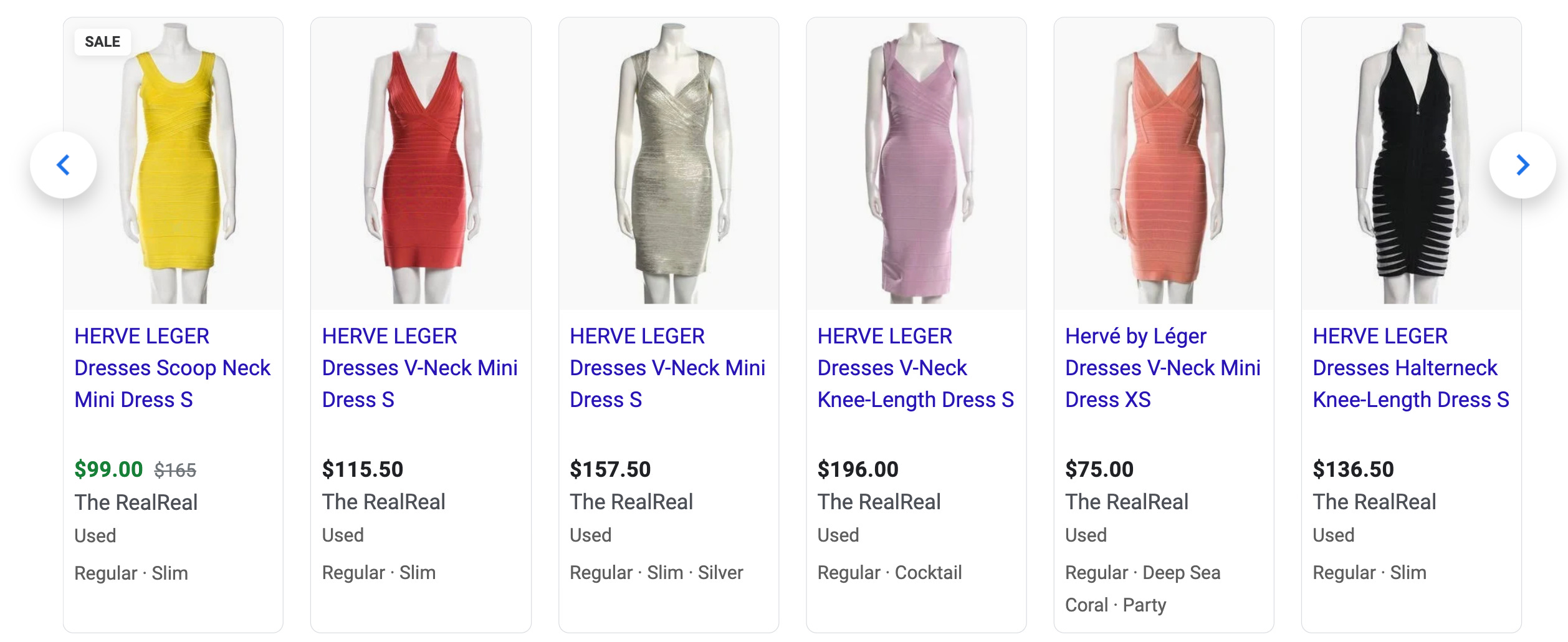
CB’s timing is clever, but with prices north of $200 and vintage Hervé Léger pieces going for as little as $80 on eBay or The RealReal, I’m skeptical the new collection will hold real cachet. Vintage and secondhand are the moment. Even Depop is leaning in with a series of summer IRL activations.
There’s real cultural cache in the hunt—in finding the perfect piece with history and provenance that no one else has.
 Tiktok failed to load.
Enable 3rd party cookies or use another browser
Let’s Talk About The Cutting Room Floor
If you don't know The Cutting Room Floor, it's fashion's only fashion show hosted by Recho Omondi—a cut-and-sew designer turned podcaster (though fashion journalist might be a more fitting title). It features in-depth interviews with people working in various aspects of fashion, from designers to model agents and other industry professionals.
What strikes me most about Omondi's work is how she built something sustainable in an industry obsessed with overnight success. The show has been around for over five years, with Omondi releasing seasons deliberately, taking breaks when needed, and maintaining refreshing transparency about ownership, which is exactly why she uses Patreon to build community rather than chasing advertiser dollars. This didn’t just appear overnight, and as someone who's worked in podcasting for years, I recognize the quiet discipline required for that kind of longevity.
Her approach reminds me of my own frustrations when I was running my show—how it often felt like people cared more about viral clips and follower counts than the actual work or depth of the conversation. There’s a tension between not caring about virality while simultaneously recognizing its importance, and how exhausting it can be to keep going without being anchored by flashy visuals or video content. But Omondi's production setup is something I genuinely love: clean, focused, and entirely centered on the conversation.
The Anti-Viral Ethos
The Cutting Room Floor’s editorial pace leans into what I'd call an anti-viral, slow-drip mode of storytelling. This signals a crucial shift in the medium: good podcasting isn’t always the loudest—it’s the most sustained. We’re seeing similar approaches from fashion creators like lexi ioannou of Nou Shoes, who has showcased their behind-the-scenes process with the same kind of patient, unglamorous honesty.
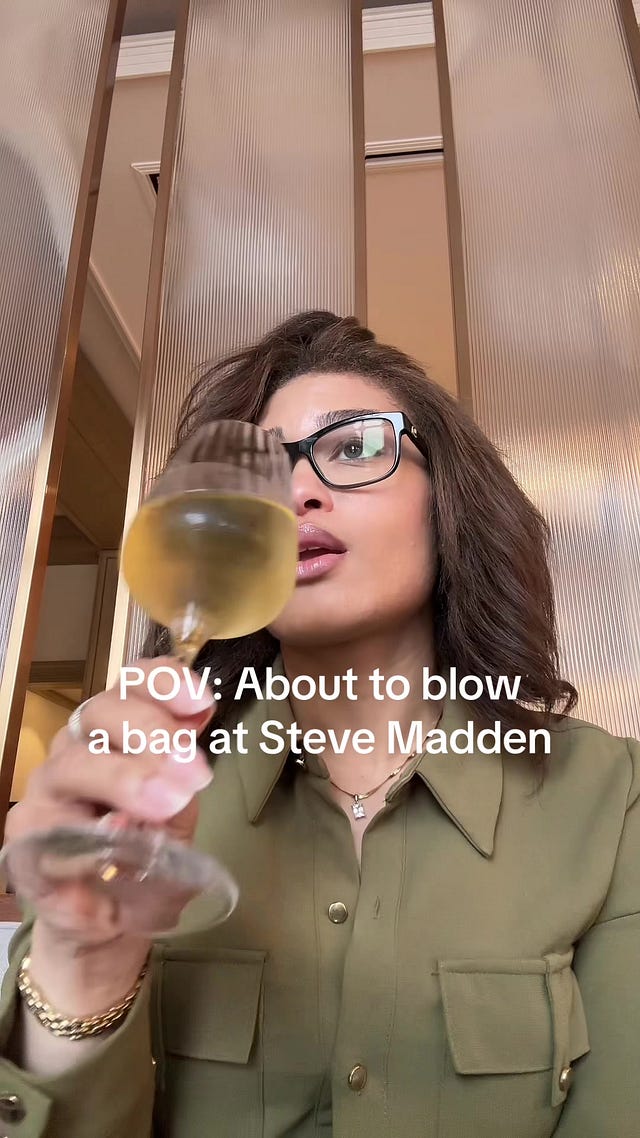
Most recently, clips from her show went viral when she interviewed mid-tier shoe titan Steve Madden, directly asking him about his brand’s shoes being dupes of styles from Chanel to Hermès. Omondi asks the questions that make publicists nervous, and crucially, she doesn't move on after the first deflection.
Last year, the show caught fire when Mos Def (Yasiin Bey) appeared to discuss Drake and the commercialization of hip-hop music. I've been a Patreon subscriber since 2020, when she interviewed the founder of Man Repeller—who at the time was grappling with allegations of toxic workplace culture and racism, particularly after the company posted statements of allyship during the 2020 Black Lives Matter movements. In that episode, the founder wrestled with her own privilege as an Upper East Side New York darling, and Omondi referred to her as a "Jewish American princess," which sparked antisemitic backlash.
I mention this not to relitigate old controversies, but to illustrate Omondi's consistent dedication to covering industry personalities with unflinching directness. The show has never shied away from difficult conversations.
Beyond the Viral Moment
What fascinates me about viral clip culture—especially as someone who's worked in podcasting for over five years—is how reductive these moments become. I'm genuinely curious how much these viral flashes translate into sustained listenership and Patreon sign-ups, because that's where the real work happens.
What bothers me about the discourse around her recent success is how people credit Steve Madden's presence rather than Omondi's preparation. It's like praising a surgeon's patient for showing up instead of recognizing the skill that made the operation successful. This is exactly how we’ve flattened podcasting into an extension of marketing and personal branding, rather than recognizing it as an inherently inquisitive medium.
 Tiktok failed to load.
Enable 3rd party cookies or use another browser
Her interviews are meticulously researched and avoid the cheeky, follower-bait moments that hosts like Speedy from Complex (who I still adore) or many celebrity-driven shows rely on—those clips engineered to dominate the internet for a news cycle. While Omondi’s conversations still yield memorable moments, they feel earned, woven naturally into investigative questions that probe uncomfortable territory without ever feeling like an attack. This isn’t a show for the passive listener, but for the curious one—someone willing to do a little thinking or even a bit of digging while they listen.
The Standard We Should Expect
In an era of celebrity podcasts and friendship interviews, watching someone actually do reporting feels almost nostalgic. Her approach stands out mainly because preparation has become so rare. When she interviewed the Man Repeller founder about workplace allegations, she didn't just ask about the controversy; she let the uncomfortable silences breathe, creating space for answers that felt unrehearsed.
What I find most compelling isn't that her interviewing style is particularly revolutionary—it's how much it stands out. She has that Barbara Walters quality of making hard questions sound conversational. The fact that this feels exceptional rather than expected says more about the current state of media than it does about Omondi's unique talents, though those are considerable.
Please read her piece on Ayo Edebiri for The Wall Street Journal.
The Cutting Room Floor represents something crucial in our current media landscape: proof that you can build something meaningful without chasing algorithms, that sustained quality beats viral moments, and that there's still an audience hungry for the kind of journalism that takes time to develop. In an industry that often mistakes loudness for importance, Omondi has quietly built something that matters.
As a podcast producer, I see her work as a reminder of what the medium can accomplish when it's allowed to breathe, funded by a community rather than advertisers, and when the host understands that the real story often lives in the follow-up question or silence. That's not just good podcasting, that's good journalism, period.
If you liked The Cutting Room Floor, check out The Institute of Black Imagination, hosted by artist, writer, and designer Dario Calmese, and Talk Easy with Sam Fragoso. Talk Easy started as an independent podcast before partnering with Slate, and it’s still just as thoughtful and conversational as ever. Both shows bring the same level of depth and storytelling that The Cutting Room Floor delivers, offering more meaningful, nuanced conversations that stand out in today’s media landscape.
That’s all for today. Next Monday is my birthday, so Sunday’s newsletter might be a bit more reflective and meditative, but there’ll still be links, of course. Thanks for reading, and if you’re feeling generous, a coffee or a gift (hint, hint) wouldn’t hurt. You can always reach me at ellice@elliceellis.com. Until then <3.
Also would love to hear your thoughts on the Beyonce shirt buffalo discourse
Thank you for this shoutout <3 The irony is I pitched my concept to Steve Madden & they passed :)